These days, many clients prefer to be able to work out and follow a training program from the comfort of their own homes. As a personal trainer, you can provide fun and appealing video content for your online program, website, or social media channels that will keep your clients challenged and engaged.
If you’ve considered doing this, here are some important tips from the experts at Bryan University that will help you create high-quality video content for your clients as a personal trainer.
First, you’ll want to decide what routines to record. As a personal trainer, you’ll likely have clients of all different abilities, ages, and with varying interests and goals. So it’s best to create a stream of content that has a little bit of something for everyone. You’ll also want to make sure the routines you record aren’t too long, answer common client questions while recording, and keep viewers engaged by addressing common mistakes and solutions.
To make the most professional-looking videos, you won’t want to just “wing it.” Instead, decide if you’ll do an intro and outro, separate segments or one take, what kind of audio you’ll have, and how many (if more than one) camera angles you’ll require. You’ll also want to decide what camera angles you’ll use while recording, make sure you have an appropriate setting, and choose an area with great lighting! (You can pick up cheap lights online that will help.)
Live streaming is a great option for a personal trainer because it’s popular for viewers on Instagram, Facebook, and YouTube. Live streaming also promotes a ton of engagement. It’s also one of the easiest types of social media content to create and it may be easier for you to brand your content with your own style and flair while it’s live. Live streaming also works if you have several clients who can watch your video at a particular time of day, like on a lunch hour or in the evening, to make it seem like they are attending a class in a gym.
If you’re just getting started, iMovie is a great tool for video editing. While editing, make sure you use royalty-free music tracks to increase your production value. Also, be cautious about over-editing the lighting to create contrast. Sometimes, this can lead to a video that looks low-quality. Once you feel more comfortable with iMovie, you can upgrade to software like Adobe Premiere Pro, which will provide more professional tools for your workout video editing.
Related Post: How to Market Your Skills As An Exercise, Nutrition and Health Promotion Career
If your dream in life is to become a personal trainer, we can help you get there. At Bryan University, our School of Health and Wellness offers undergraduate programs including a personal training program (diploma) and an exercise specialist program (associate of applied science). Please call us toll-free at 1-855-862-0755 or enroll now.
Medical assistants are incredibly vital for the success of a medical practice, whether they work in a doctor’s office, clinic, or specialty office. They complete a variety of different tasks, from doing lab work and checking patients’ vitals to greeting patients and completing administrative duties.
The great thing about being a medical assistant is that you have the power to choose your own work environment. Many of our graduates at Bryan University choose to work at a doctor’s office or a clinic, but the choice is up to you.
There are many other alternative work environments for medical assistants, but here’s a quick overview of what it would be like to work at a doctor’s office or a clinic and how they compare.
As a medical assistant at a doctor’s office, you’ll probably work with a smaller group of medical professionals than you would in a clinic setting. Staffers you’ll work with include the doctor, other medical assistants, a lab technician, receptionist, nurses, and an office manager (or someone similar).
Since a doctor’s office is likely a smaller setting, you and other members of the staff will probably be cross-trained to handle a variety of different tasks and pick up the slack when things get busy. As a result, your work will be more individualized and you may not have the opportunity to advance into several different roles unless you switch to a new practice or a larger clinic.
If you work at a clinic, you’ll likely be expected to take on some or all of the office tasks. In a larger clinic setting, you’ll probably have a specialized function and may end up taking on tasks that make you more of a nursing assistant.
This can stretch you, but will also allow you the opportunity to become skilled in many areas. As you develop diversified skills, you raise the bar in terms of furthering your career in a more competitive environment.
At a larger office or clinic, you can also expect to work with a diverse group of people who have various types of expertise, medical experience, and backgrounds. This is also good news for you because it means you’ll have more opportunities to learn different skills or become well-trained in very specific functions, like taking electrocardiograms, providing wound care, or phlebotomies.
Related post: Simple Things to Enhance Your Medical Assistant Career
At Bryan University, we can help you explore these options and find the right fit for your goals and passions. Through our School of Allied Health, you can become a part of today’s healthcare industry with our Medical Assistant Diploma or AAS. Please call us toll-free at 1-855-862-0755 or enroll online to get started.
As an exercise specialist, your job is to help others improve their lives through exercise and wellness. Most people who pursue this career are passionate about what they do, but that doesn’t mean motivating people to stay active isn’t a challenge sometimes!
Just like in any profession, you’re likely to face dilemmas as you work with your clients. Fortunately, there are many different types of tools you can use to promote exercise and keep your clients active and moving. Here are some tips from the experts at Bryan University.
Need some ideas to motivate your clients? Here are four great ways to do it.
Related post: Great Nutrition Resources for Your Exercise, Nutrition and Health Promotion Career
If you’re passionate about helping others improve their lives through health and wellness, these tools can help you succeed as an exercise specialist. Learn more about our career program options by calling toll-free at 1-855-862-0755 or enrolling online today.
If you’re interested in pursuing a career as a healthcare professional, either a medical assistant or a medical administrative specialist may be the right career path for you.
At Bryan University, we want to help all our students achieve their personal and professional goals. Although any allied health career is an honorable and worthwhile occupation, it’s always a good idea to do thorough research to determine which role is best for you. If you’re trying to decide between these two positions, here are the primary differences and similarities between them.
Related post: Resume Writing Tips for Allied Health Professionals
Medical assistants typically work in doctor’s offices, clinics, and other types of healthcare facilities. Their role is a mixture of administrative tasks and therapeutic medical care services. For example, as a medical assistant, you would complete the following tasks:
When a medical assistant helps with injections and medication administration, a doctor always directs and observes these procedures. Additionally, a medical assistant’s duties will vary depending on the medical practice where they work. But the above duties are very typical for this position.
A medical administrative specialist is an allied health professional that usually works in a clinic setting. This is a client-facing role that also requires individuals to complete a wide range of administrative tasks that ensure the medical office runs smoothly.
For example, some common tasks a medical administrative specialist regularly completes include:
These tasks all require significant attention to detail, accuracy, computer literacy, and good organizational skills. As a medical administrative specialist, you’ll also need basic customer service skills and be comfortable working directly with patients since you’ll be doing that regularly.
Related post: Choose One Of Our Many Allied Health Programs
If you need help deciding on your career path or you’re ready to explore your program options for allied health, contact Bryan University by calling (855) 862-0755 or contact us online.
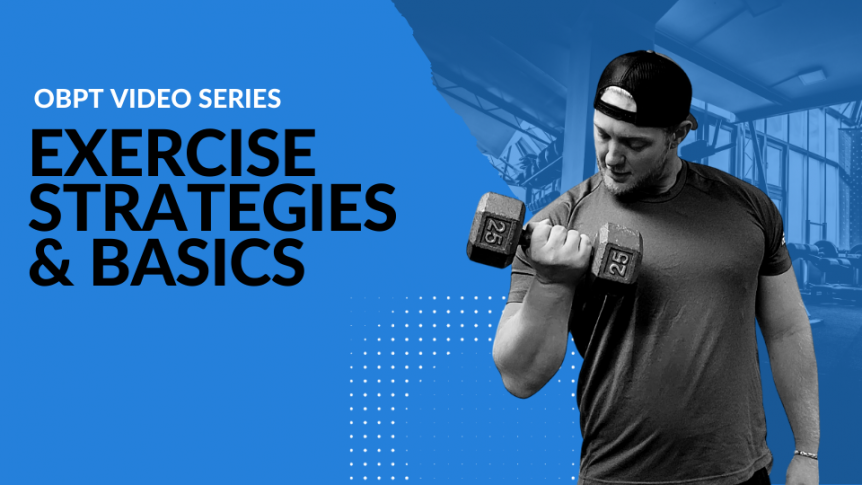
Welcome back to our OBPT Exercise Strategies and Basics series!
Whether you are a beginner or an elite athlete, consistency is the key!
Ollie Brown, Certified Personal Trainer and Bryan University Graduate, focuses on the importance of consistency. For part one, we take a deep dive into the first step to maintaining consistency in our most recent video, Exercise Strategies and Basics – Consistency Pt. 1.
If you missed our first video, go check out our blog From Student, to Graduate, to Partner: Bryan University’s Ollie Brown Shares Best Practices in Fitness now and stay tuned to bryanu.edu for more tips from Ollie. 2022 is the right time for you to clarify your goals with vision. 2022 is #20/20YOU!
Want to know more about getting a personal trainer? Send Ollie a message or check out OBPT on Facebook!
Want to learn more about becoming a personal trainer? Talk to someone at Bryan University now or set up a time to chat later.
Welcome back to our OBPT Exercise Strategies and Basics series!
Whether you are a beginner or an elite athlete, consistency is the key.
Ollie Brown, Certified Personal Trainer and Bryan University Graduate, focuses on the importance of consistency. For part two, we take a deep dive into the value of healthy eating and the role it plays in maintaining consistency. Watch to learn more in our most recent video, Exercise Strategies and Basics – Consistency Pt. 2.
If you missed part one, watch it here at Exercise Strategies and Basics – Consistency Pt. 1.
If you missed our first video, go check out our blog From Student, to Graduate, to Partner: Bryan University’s Ollie Brown Shares Best Practices in Fitness now and stay tuned to bryanu.edu for more tips from Ollie. 2022 is the right time for you to clarify your goals with vision. 2022 is #20/20YOU!
Want to know more about getting a personal trainer? Send Ollie a message or check out OBPT on Facebook!
Want to learn more about becoming a personal trainer? Talk to someone at Bryan University now or set up a time to chat later.
Welcome back to our OBPT Exercise Strategies and Basics series!
Ollie Brown, Certified Personal Trainer and Bryan University Graduate, focuses on the importance of consistency. For part three, we take a deep dive into the value of incorporating short-term and long-term goals, and the role it plays in maintaining consistency. All right here in our video newest video, Exercise Strategies and Basics – Consistency Pt. 3.
If you missed part one, watch it here at Exercise Strategies and Basics – Consistency Pt. 1.
If you missed our first video, go check out our blog From Student, to Graduate, to Partner: Bryan University’s Ollie Brown Shares Best Practices in Fitness now and stay tuned to bryanu.edu for more tips from Ollie. 2022 is the right time for you to clarify your goals with vision. 2022 is #20/20YOU!
Want to know more about getting a personal trainer? Send Ollie a message or check out OBPT on Facebook!
Want to learn more about becoming a personal trainer? Talk to someone at Bryan University now or set up a time to chat later.
One of the main features of Bryan University’s degree programs is that you can graduate in less time with straightforward, career-focused courses.
Our Master of Business Administration (MBA) program represents a cornerstone of Bryan University. We’re proud to offer this degree for our students.
We’re going to cover four main features of our MBA program in today’s blog to help you determine if this program is a good fit for you.
You can earn an MBA in just 50 weeks, over five, 10-week quarters, at Bryan University. Classes range from organizational behavior and corporate finance to human resources management and management information systems.
What else can you do in 50 weeks?
All you have to do is set some short-term goals. You’ll be less than a year older after earning an MBA degree. Start in the spring, finish next spring for an MBA.
Our admission requirements for an MBA include students who have completed a bachelor’s degree program from a regionally or nationally accredited post-secondary institution.
Your degree can be in writing, drama, chemistry, computer science, pre-med, or psychology. Whatever your specialty, you can pivot your expertise into an MBA in just 50 weeks.
Every course in Bryan University’s MBA program is online only. You don’t have to attend class at a certain time, nor is there daily homework. Learn at your own pace, so long as you complete assignments based on the course syllabus and timeline.
You don’t need regular contact with your instructors unless you want help understanding the assignments or text, or if you have questions about concepts.
Otherwise, you have complete freedom to study whenever you have time. Look over your textbook for an hour and a half after the kids are asleep. Get up early before they have to get to school. Look over an assignment on your lunch break from work.
Bryan University’s career-focused programs are focused on you.
Tuition costs for our MBA program are $360 per credit hour. There are no extra fees for student activities. No meal plans. No room and board.
You can easily calculate your tuition when you apply for student aid through FAFSA.
Having a set tuition rate also lets you budget your educational expenses as you build towards earning your MBA degree from Bryan University.
Graduate in less time with straightforward, career-focused degree programs. All you need is 50 weeks over five quarters.
What can you do in less than a year? You can earn an MBA degree.
Bryan University gives you the opportunity to earn an MBA degree in just 50 weeks over five quarters.
What can you do in a year?
You could earn an MBA with our straightforward, career-focused courses.
Find out how by reading on.
You need 560 contact hours (the number of hours you spend in instruction) and 56 quarter-credit hours to complete your MBA.
560 contact hours divided by 50 weeks comes out to around 11 hours per week, or 90 minutes a day.
Can you find 90 minutes a day to devote to a class?
Consider: 1 hour for a lunch break at work and 30 minutes commuting per work. You already have 90 minutes for five days right there.
By just putting together some short-term goals in a day (just 90 minutes), those turn into a week, a month, and then a year before you know it to earn an MBA.
What else can you do in a year?
You’ll take 14 core courses, all relating to business, ending with a capstone project that showcases what you have learned in the past year.
Classes include:
Organizational behavior, where you learn the dynamics of groups, establishing common values, motivating employees, managing change, and intra-organizational communication.
Managerial accounting, in which you’ll learn to analyze and interpret financial data, develop and evaluate the data, and conduct cost-benefit analyses.
Research methods, a class that teaches you how to conduct business research, such as surveys, experiments, and data analysis. You’ll also dive into social research.
Organizational management, where you understand how to lead various organizational structures within a business setting while addressing technology, culture, and changes in leadership.
Managerial economics, to give you an understanding of costs, pricing, revenue, prediction and forecasting, budgeting, investments, and consumer behavior.
Designing and executing management strategies, a course aimed to help you learn about making strategic decisions, inventory, production, forecasting, quality control, scheduling, planning, and resource allocation.
Social media and marketing strategies, where you will understand how to leverage social networks for identifying advertising and promotion opportunities, competitive analysis, and market segmentation to give you an idea of how to market a brand.
Interested in earning an MBA in less than a year? Bryan University can give you the tools you need to make it happen.
Call us at 1-855-862-0755 or apply now for more information.
Bryan University’s goal is to provide straightforward, career-focused classes to give you the education you need to enter your chosen field of study.
Have you considered our medical billing and coding program?
We’ll go over five highlights of this program so you can see if you’re a good fit.
In just 70 weeks, you earn an associate in applied science degree. That’s just 16 months, not even a year and a half, covering seven quarters at 10 weeks per quarter.
By setting some short-term goals of studying just 90 minutes a day, you could have the tools you need to jumpstart your career as a medical billing and coding specialist.
Bryan University has an affiliation with the American Academy of Professional Coders (AAPC). Our 70-week curriculum prepares you to sit for the Certified Professional Coder exam from this organization.
After passing the CPC exam, you have the right to append your name with CPC afterward, and medical professionals will recognize your accomplishment in the field.
Bryan University’s associate in applied science degree program is 100% online with minimal day-to-day scheduling. All you need to do is study the textbook, follow the assignments, turn them in before the deadline, and set aside enough time to study on a regular basis to earn your degree.
You don’t have to worry about attending class two or three times a week. No worries about parking, forgetting your textbooks, or commuting. All you need is a laptop, a strong internet connection, and a drive to succeed with this distance education model.
Your core courses focus squarely on medical billing and coding to give you the knowledge you need to understand major concepts related to this specialization. Everything you learn will go towards your degree as opposed to general education requirements.
A total of 13 core classes cover topics from medical terminology and anatomy to pharmacology and a capstone course that gives you an opportunity to highlight what you’ve learned over the past year.
Brian University’s medical billing and coding program puts you in touch with plenty of knowledge about the Current Procedural Terminology coding system, International Classification of Disease, and Healthcare Common Procedure Coding Systems. You’ll have access to the knowledge and skills base of billing and coding, working with insurance companies, and the terminology needed for passing the CPC exam.
Are you ready to dive deeper into a vibrant career as a medical billing and coding specialist?
Call us at 1-855-862-0755 or apply now for more information.